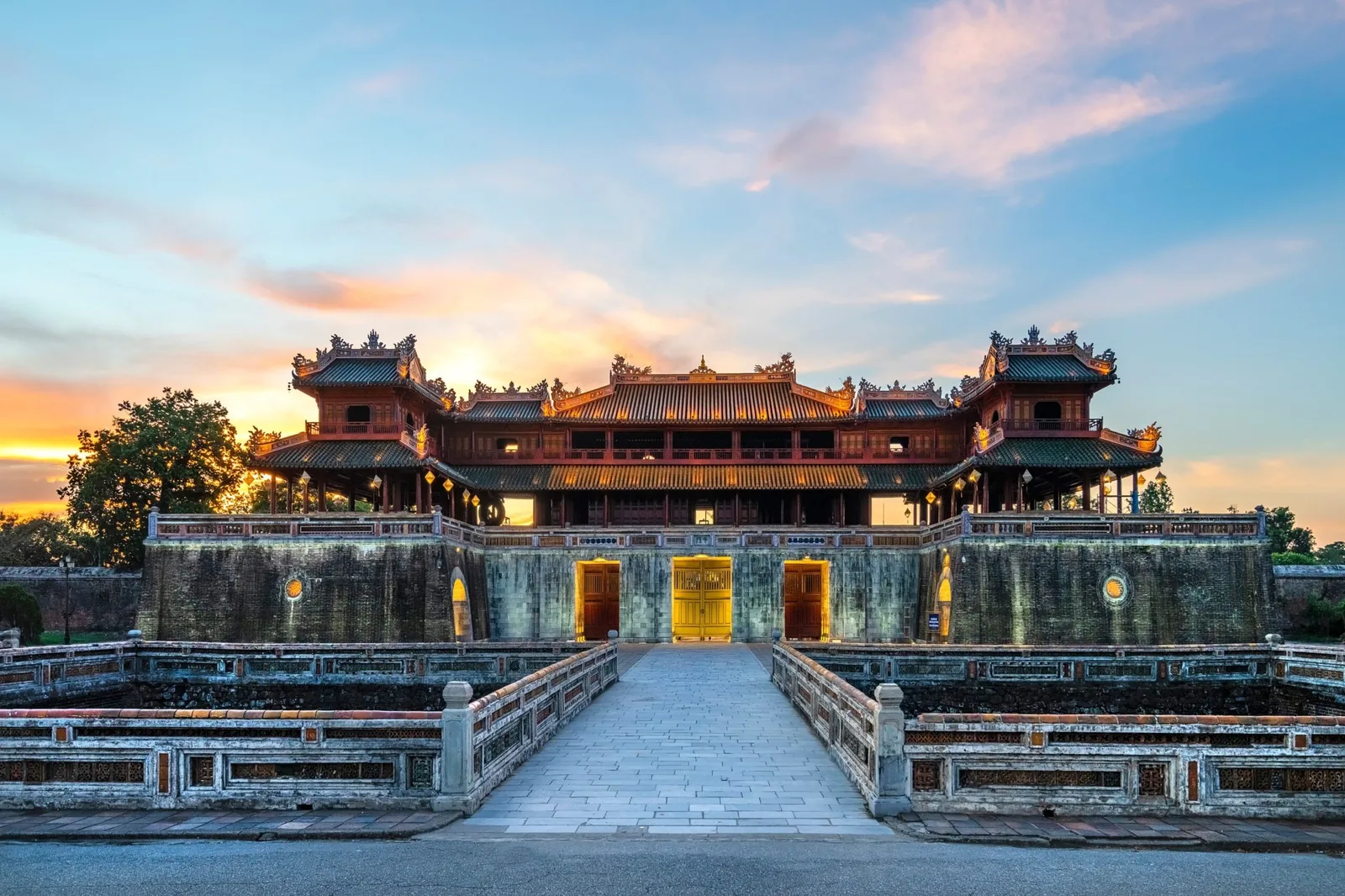
Why come here
Hue was the seat of the Nguyen emperors from 1802 until 1945, and the city is still organised around that: a walled citadel on the north bank, a river through the middle, and the royal tombs scattered through the countryside upstream.
Much of the Forbidden Purple City was destroyed in 1968 and the empty foundations are as eloquent as the restored halls. Beyond the monuments, Hue has the most technically demanding cooking in the country — a court cuisine of small, precise, deliberately spicy dishes.
What to do
- The Imperial City: citadel walls, Thai Hoa palace and the ruins of the Forbidden Purple City
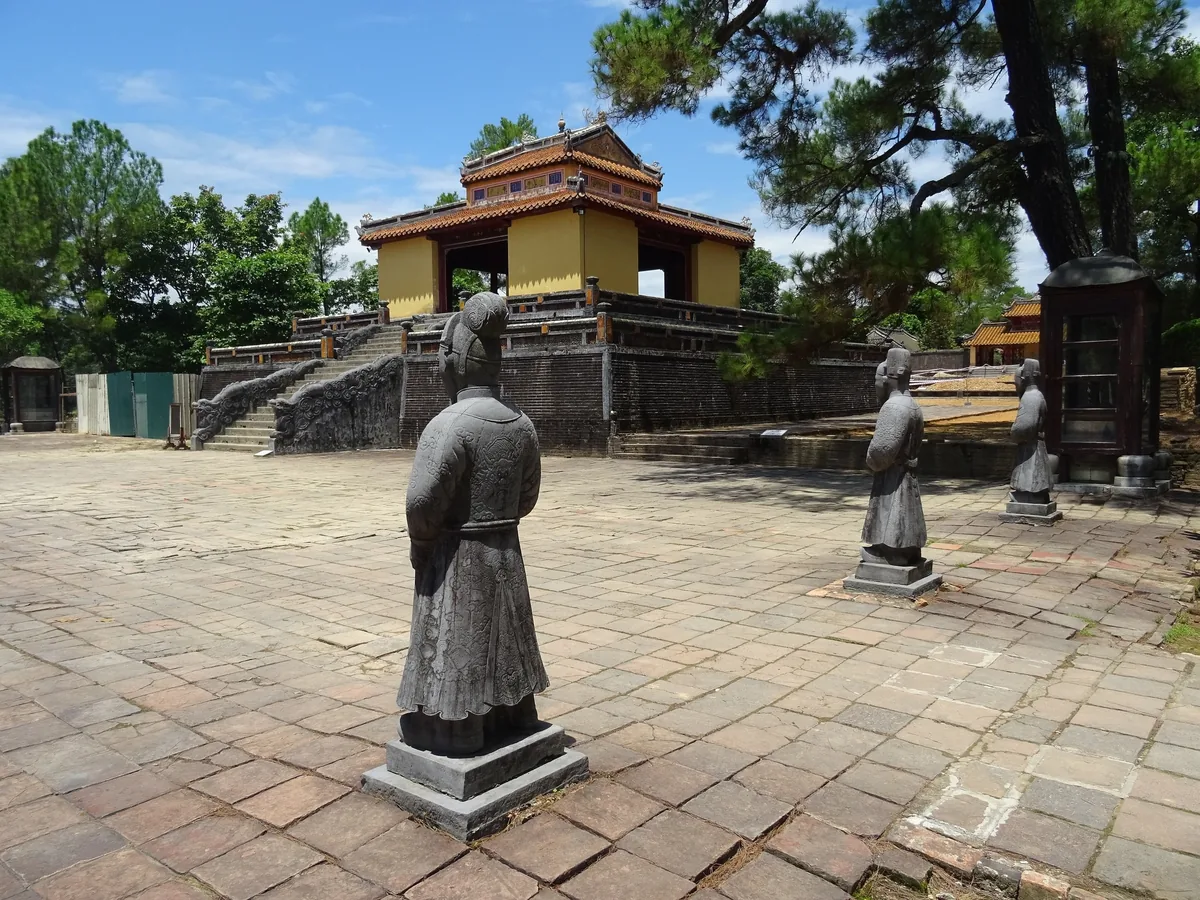
- The royal tombs — Minh Mang for symmetry, Tu Duc for melancholy, Khai Dinh for sheer excess
- Thien Mu pagoda and its seven-storey tower above the Perfume River
- A dragon-boat trip on the Perfume River, or a bicycle along its banks
- Thanh Tien paper-flower village and Sinh village folk prints
- Thanh Toan covered bridge and its morning market
- Bun bo Hue, banh khoai, banh beo and the royal-cuisine restaurants that still serve them
When to go
February to April is the best window: dry, mild and clear. May to August is very hot, and the citadel offers almost no shade. September to December is Hue's rainy season and can flood — the monuments stay open, but outdoor plans need a backup.
Our trips that go here
Plan a trip here
Tell us your dates and we will build Hue into a route that works with the rest of your trip.