Why travel this route
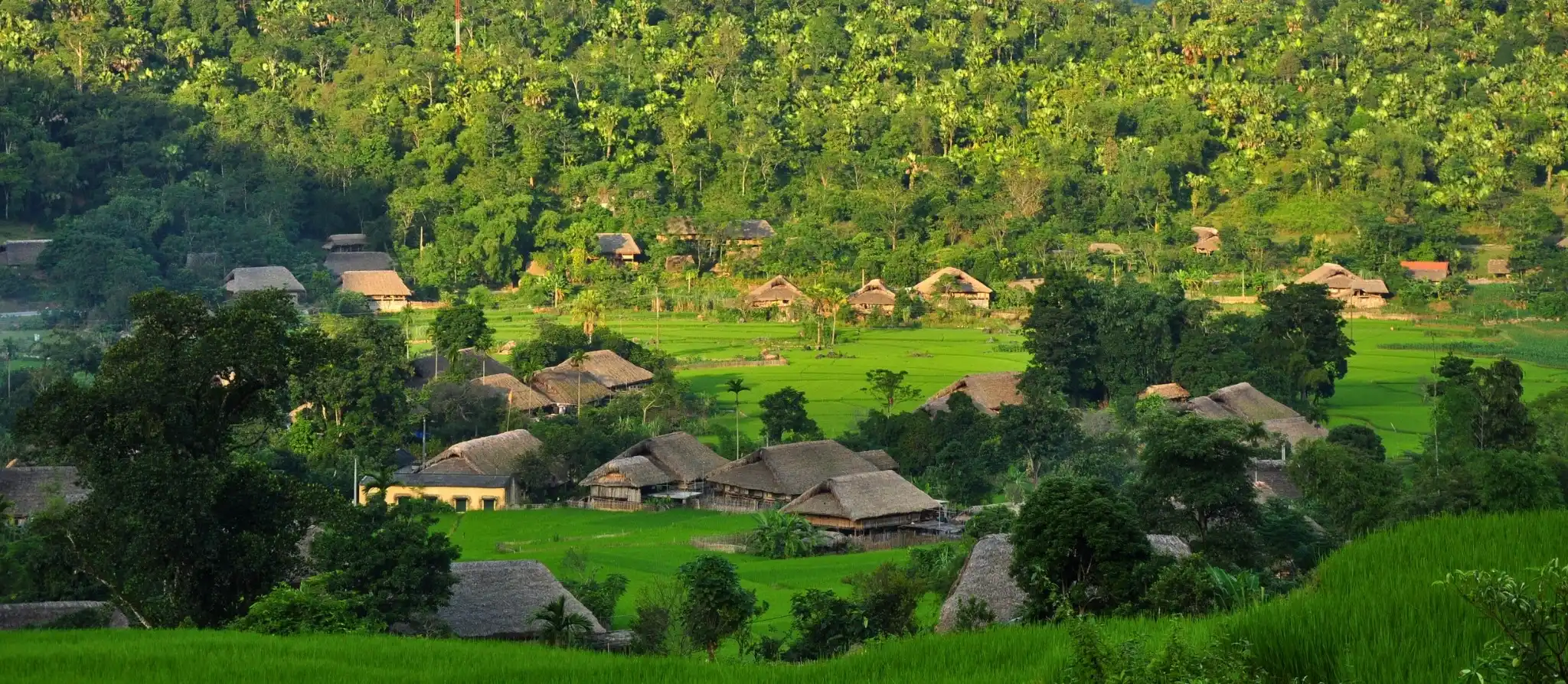
The north-west rewards distance. Every hour further from Hanoi the villages get older and the roads get better looking, and by day three you are on ridge roads with terraced hillsides falling away on both sides.
This is a driving loop with walking built in, not a trek. You cover ground, stop where it is worth stopping, sleep in homestays and small guesthouses, and end over the Tram Ton Pass into Sapa.
- Moc Chau's tea plantations, plum orchards and Hmong hamlets on the way west
- The Nghia Lo valley, a Thai heartland that sees almost no foreign visitors
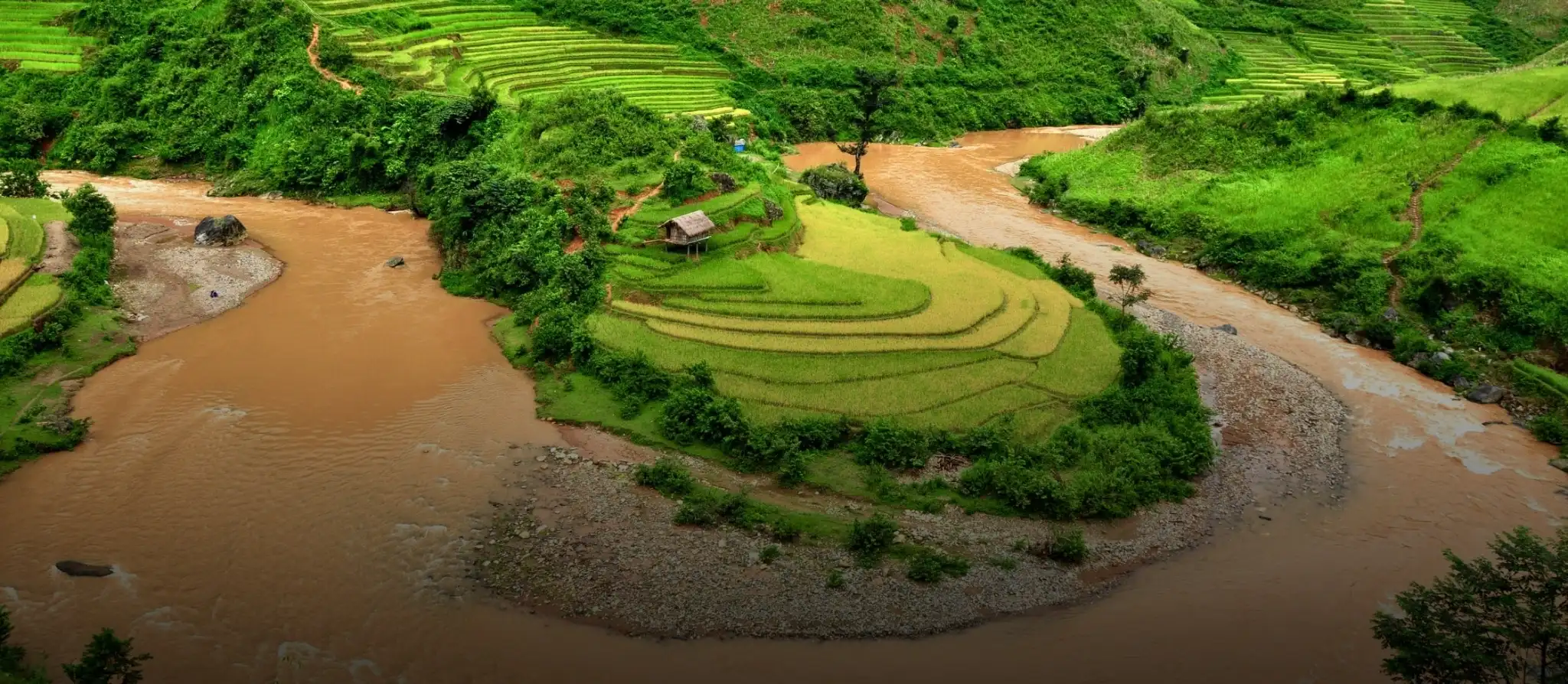
- Mu Cang Chai's terraced hillsides, some of the steepest cultivated slopes in Asia
- A homestay with a Red Dao family in Ta Phin, herbal bath included
- The Tram Ton Pass, the highest road in Vietnam, into Sapa
- Weekly markets where people come to trade rather than to sell souvenirs
Where you sleep, night by night
Five nights, moving each day. Long views, short walks, and a lot of time with the window down.
| Stop | Nights | Why we stop here |
|---|---|---|
| Moc Chau | 2D | Tea plantations and plum orchards on a cool plateau, with Hmong and Thai hamlets in between. |
| Yen Bai | 2D | Home to the Mu Cang Chai terraces, at their most photogenic when the water goes in and again at harvest. |
| Sapa | 2D | High valleys under Fansipan, terraced from valley floor to ridge line and farmed by Hmong, Dao and Tay families. |
What you actually do
Driving days of three to five hours, broken by walks of one to three hours in the villages.
- Tea plantation and orchard visits at Moc Chau
- Walking between Thai villages around Nghia Lo
- Photographing the Mu Cang Chai terraces
- Red Dao homestay and herbal bath in Ta Phin
- Crossing the Tram Ton Pass
- Weekly ethnic markets, depending on your travel days
- Boat ride and local meals with host families
Good to know before you book
Roads are sealed but winding. If anyone is prone to motion sickness, say so and we will seat them accordingly and plan more stops.
Plan this trip with us
Tell us your dates, how many of you are travelling and what you would like to change. A trip planner in our Hanoi office replies within one working day with a day-by-day plan and a price.