Why travel this route
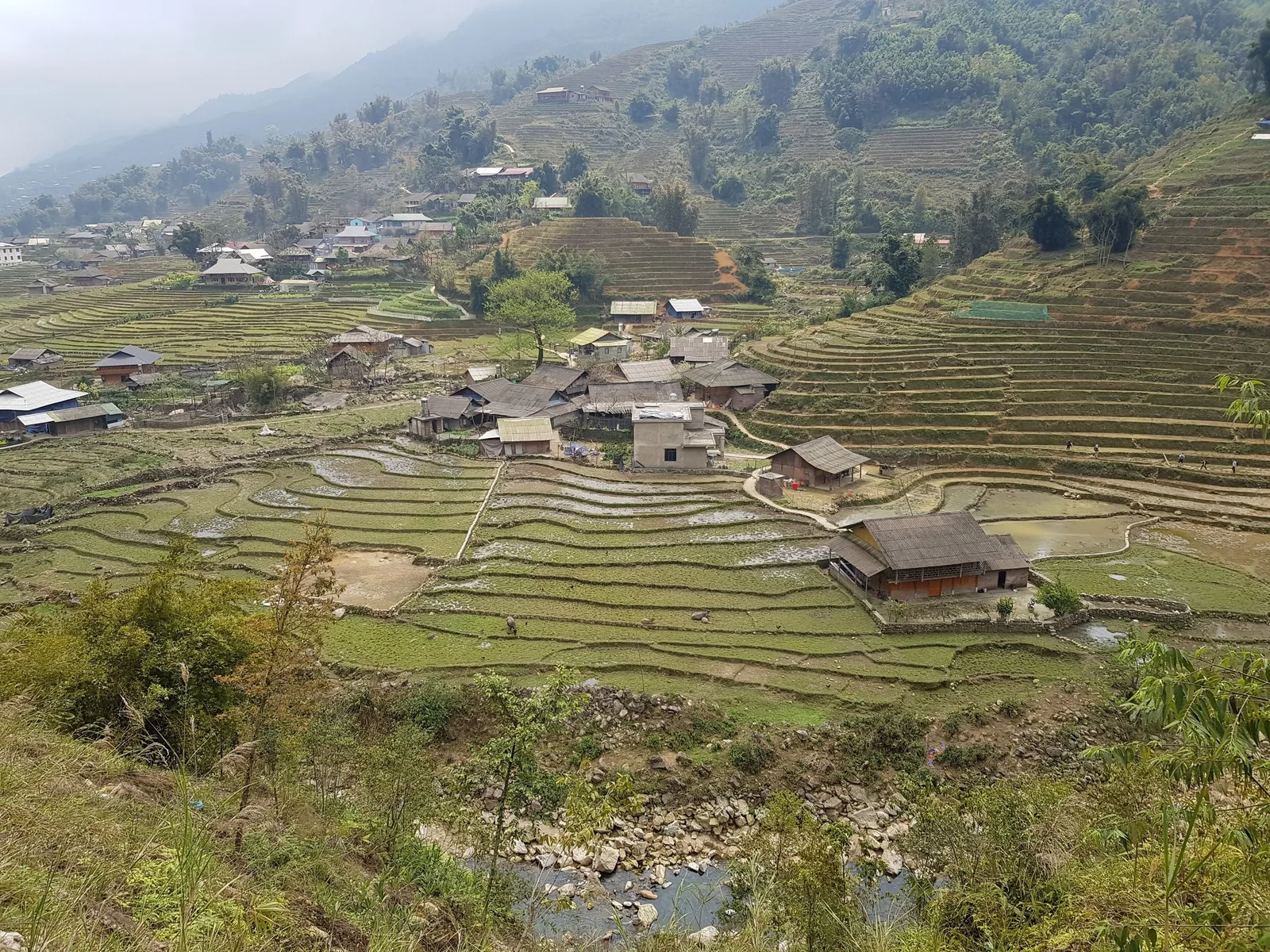
Sapa town has been rebuilt into something unrecognisable, but the valley below it has not. Twenty minutes of walking gets you past the last guesthouse and onto paths that connect Y Linh Ho, Lao Chai and the hamlets beyond.
The night is the reason to do this as two days rather than one. You eat with the family, help if you want to, learn how batik wax patterns are drawn on hemp, and wake up in the valley instead of driving back into it.
- Walk down from Sapa into the Muong Hoa valley on village paths, not the road
- Cross streams and terraces between Y Linh Ho and Lao Chai
- Learn beeswax batik from a Hmong woman who has been drawing the patterns since childhood
- Eat and sleep in a Hmong family home
- Continue through more hamlets on day two, with the terraces above and below you
- Return to Sapa or catch the night train from Lao Cai
Where you sleep, night by night
One night in the valley. The walk is point to point; your main luggage stays in Sapa.
| Stop | Nights | Why we stop here |
|---|---|---|
| Sapa | 2D | High valleys under Fansipan, terraced from valley floor to ridge line and farmed by Hmong, Dao and Tay families. |
What you actually do
Four to six hours of walking each day on dirt paths, with steep and slippery sections after rain.
- Valley trekking between Hmong villages
- Beeswax batik workshop with a local artisan
- Homestay with a Hmong family
- Terraced fields, streams and hillside paths
- Train travel between Hanoi and Lao Cai

Good to know before you book
Boots with grip make the difference here — the paths turn to clay after rain. We can lend walking poles.
Plan this trip with us
Tell us your dates, how many of you are travelling and what you would like to change. A trip planner in our Hanoi office replies within one working day with a day-by-day plan and a price.