Why come here
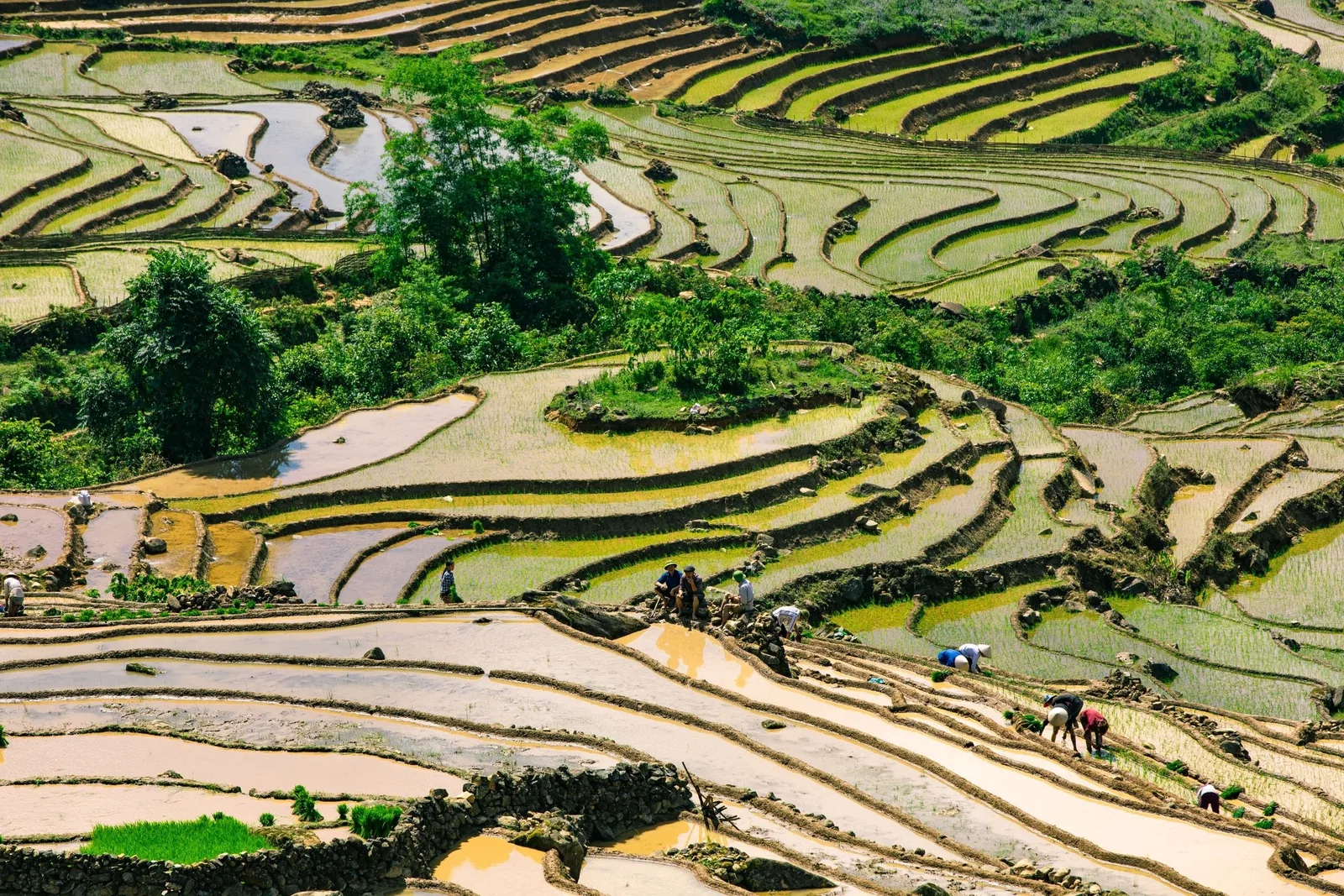
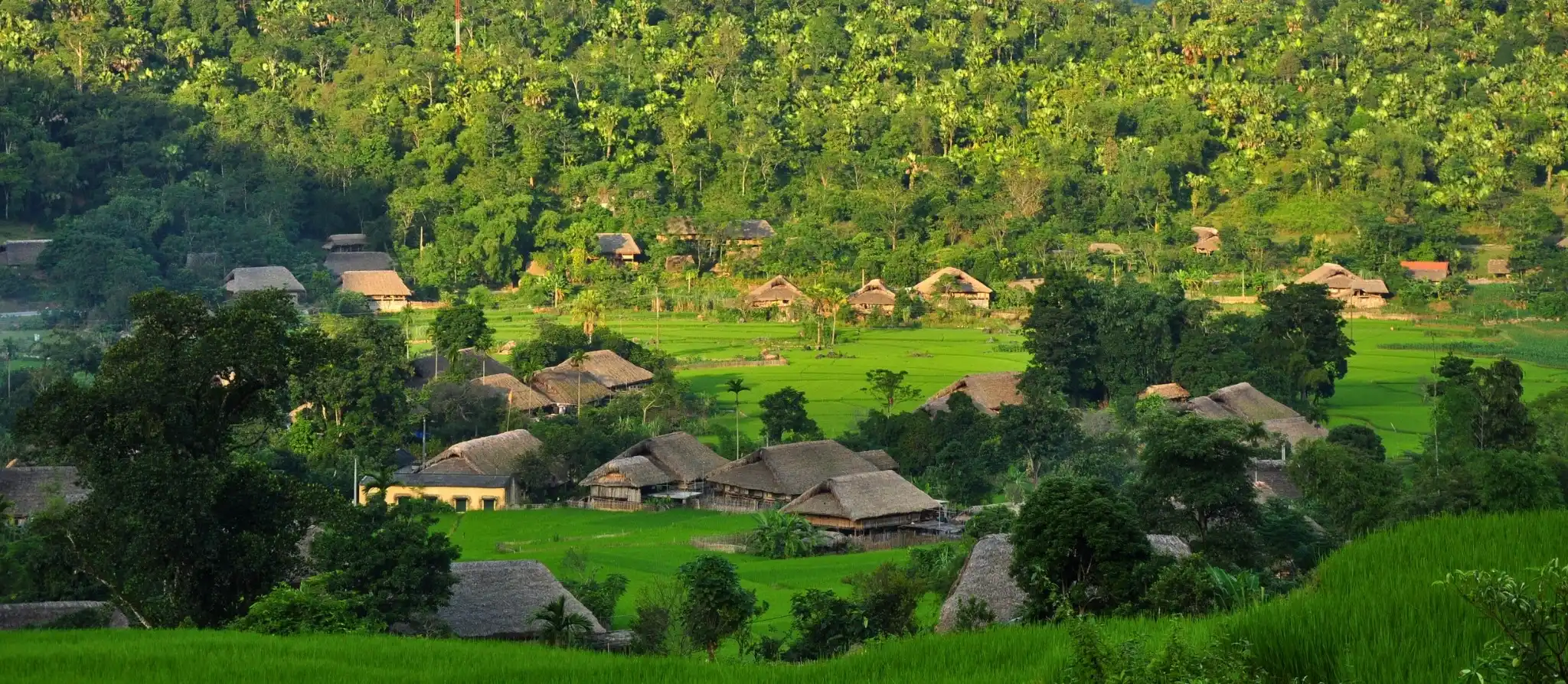
The north-west is where Vietnam stops being tropical. Valleys are terraced from the river to the ridge, the villages belong to Hmong, Dao, Thai and Ha Nhi families, and the weather changes three times a day.
Sapa town itself has been built over hard and is not the reason to come. The valleys below it — Muong Hoa, Ta Phin, Ban Khoang — still work as farmland, and further out at Y Ty, Mu Cang Chai and Moc Chau you can drive for hours without meeting another visitor.
What to do
- Walking the Muong Hoa valley between Hmong hamlets rather than driving the viewpoints
- Mu Cang Chai's terraces, among the steepest cultivated slopes in Asia
- Y Ty's Ha Nhi villages, built from rammed earth and found nowhere else in Vietnam
- Moc Chau's tea plateau and plum orchards on the way west
- The Tram Ton Pass, the highest road in the country
- Weekly markets at Muong Hum, Bac Ha and Can Cau, where people come to trade
- Homestays and herbal baths with Red Dao families in Ta Phin
When to go
Late September to mid-October is harvest, when the terraces turn gold — the best and busiest fortnight of the year. March to May brings water into the terraces and clear mountain air. December to February is cold, often below 5°C, and frequently in cloud; June to August is green, wet and slippery underfoot.
Our trips that go here
Plan a trip here
Tell us your dates and we will build Sapa & the North-West into a route that works with the rest of your trip.